RFID / NFC Authorisation
Content
What is NFC technology?
NFC (Near Field Communication) is a term for a wireless communication technology operating over very short distances with a high operating frequency of 13.56 MHz.
NFC falls under the broad family of contactless RFID (Radio Frequency Identification) authorisation, which also includes, among other things, previously used identifiers with a low operating frequency of 125 kHz.
The term NFC encompasses many different functions:
- User identification and authorisation using tags, chips, and cards from the MIFARE family, used in JABLOTRON products as well as other security, access control, and time-and-attendance systems.
- Contactless payments via payment cards, mobile phones, or smartwatches.
- Validation of electronic tickets, admission tickets, ski passes...
- Location identification based on static tags, the reading of which triggers a command on the user’s phone to launch specific functions or scenarios in smart home systems, and much more.
Although the term NFC is technically correct for all the applications mentioned, the general public often mistakenly associates it solely with holding a mobile phone or smartwatch up to a terminal.
Old versus new technology in authentication elements
- 125 kHz elements, also known as LF RFID (Low Frequency), EM Marin, EM Unique, etc., are older and significantly simpler technology. Generally, they allow only one-way communication (chip > reader) without advanced security, which is why they are gradually being phased out in related technologies.
- 13.56 MHz tags, known as NFC, HF RFID (High Frequency), MIFARE, DESFire, etc., are a newer and more advanced technology that is gradually replacing 125 kHz. Thanks to two-way communication between the tag and the reader, data exchange is possible for enhanced security through encryption, storing content on the tag, and similar features.
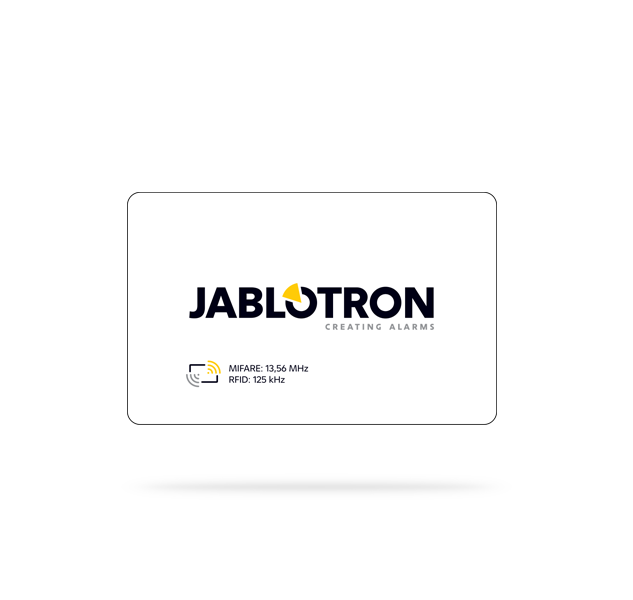
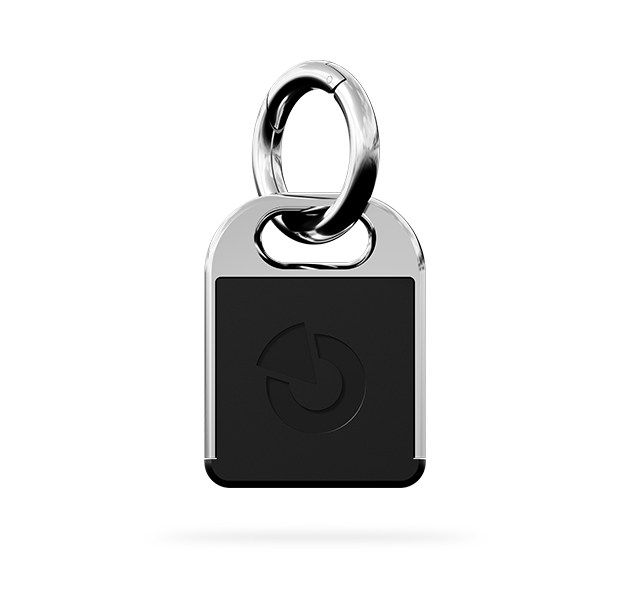
In the JABLOTRON portfolio, we are gradually transitioning to NFC for all keypads and access modules; during this transition period, both technologies may coexist in a single installation. Our product range includes dual-authorisation tags and cards that work with both types of readers for seamless compatibility.
Which MIFARE chips are compatible with JABLOTRON products?
Especially in facilities with a large number of users, it may be desirable to use a single chip for multiple systems and functions. If users have already been assigned a chip or card from another manufacturer, such as from a time-and-attendance system, compatibility must be verified for use in the JABLOTRON system.
Generally speaking, all passive MIFARE chips and cards are compatible provided they have a static UID (Unique IDentifier) set. In this default mode, typically set at the factory, the chip can also be used in the JABLOTRON system.
Some versions of MIFARE chips allow the randomly generated UID function to be activated. In this case, the identifier changes automatically with each authorisation. When the random UID function is active, third-party chips cannot be used in the JABLOTRON system.
- MIFARE Classic, MIFARE Mini: Always compatible; do not support random UID.
- MIFARE Ultralight, MIFARE Plus, MIFARE DESFire: Compatible if a static UID is set.
If you need to use third-party MIFARE devices operated with another system in the JABLOTRON system, we recommend first testing a borrowed sample to verify reliable operation:
- Verify with the administrator of the other system that it does not use random UIDs.
- Programme the chip into the JABLOTRON system, then authenticate several times on the other system, and subsequently verify the functionality of authentication on the JABLOTRON system again.
What is the security of contactless authentication devices?
Simply put, it is the same as with any other element using single-phase authentication. Contactless elements are essentially an electronic alternative to a mechanical key. Just as any key can be misused or copied, regardless of its security level, its electronic alternative can also be stolen and, under certain circumstances, misused. Single-phase contactless authorisation is always a compromise between security and user convenience.
However, compared to a key, electronic authorisation offers a number of security advantages:
- In the event of loss, theft, or suspected misuse of the chip, the JABLOTRON system allows you to immediately block the chip and thus prevent unauthorised access without delay. The chip can be blocked or deleted locally via the keypad or remotely via the mobile app or F-Link.
- Replacing a deactivated chip is inexpensive and easy, without the need to replace the lock or produce new keys for all other users.
- For facilities with a higher security level, you can set a requirement to confirm authorisation with a chip by also entering a user code. This is similar to contactless payments for larger amounts.
- Selected users can be permitted to disarm the alarm or open doors with a chip only during specific hours, linked, for example, to working hours. Even without access restrictions, notifications can be set to be sent when the system is disarmed or authorised outside of working hours, alerting the authorised person to potential chip misuse.
What to watch out for!
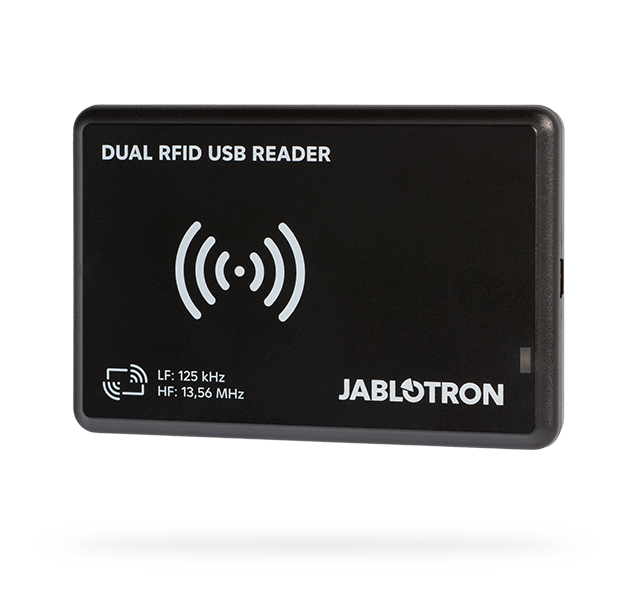
- MIFARE chips cannot be assigned to the system by entering the serial number, as was the case with older 125 kHz chips. To programme the chip, the authorisation element must be placed against the keypad or against the JA-191T USB reader, which also supports remote programming.
- The serial number listed on the packaging of JABLOTRON dual-authorisation elements is valid only for the 125 kHz chip. An element programmed by entering the serial number from the packaging will not work on NFC keypads.
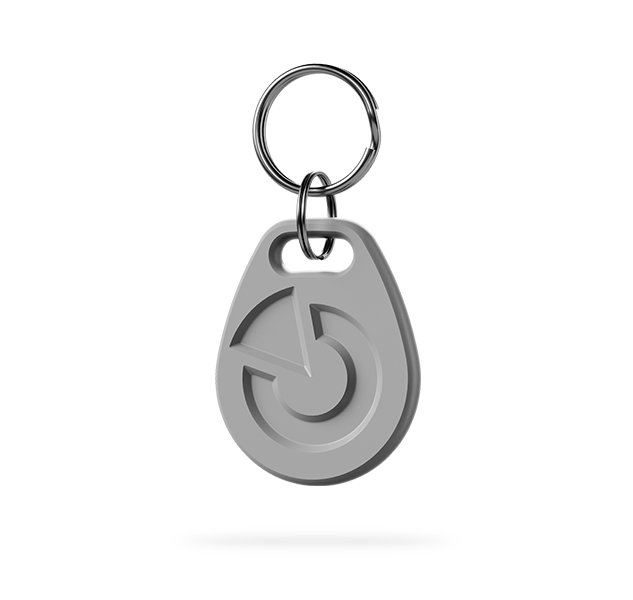
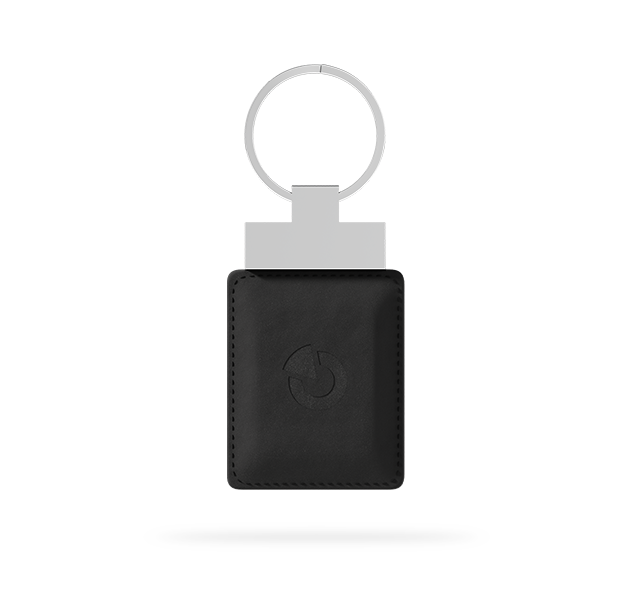
- At first glance, the JA-197J and JA-198J dual tags are identical to their 125 kHz predecessors, the JA-194J-BK and JA-195J. For easy identification, the dual versions feature a contactless reader symbol on the back.